

Ankle socks cover your entire foot and end at your ankle. Most people wear crew socks for exercising, hiking, daily use, or sometimes working. Ankle socks sit right above or right below the shoe opening, which allows them to be less visible when wearing shorts, capris, etc.Lorem ipsum dolor sit ament, consectetur adipisicing elit,sed do eiusmod tempor incididunt labore et dolore magna aliqua. it enim ad minim veniam.
Versatility: Ankle socks are incredibly versatile and can be paired with a wide range of outfits. Whether you're going for a casual look with jeans or a more formal ensemble with dress pants, ankle socks can effortlessly complement your style.
Trendy and modern: Ankle socks have become a popular trend in recent years, especially among younger generations. Embracing this modern footwear choice can help you stay on-trend and add a touch of youthful energy to your overall look.
Breathability: Ankle socks provide excellent breathability, allowing your feet to stay cool and dry, particularly during warmer seasons. Their low-cut design prevents your feet from feeling suffocated while still providing sufficient coverage.
Less friction: The friction between your feet and your shoes is reduced when you wear ankle socks. Because there is less friction, they are a great option for long treks or hectic days because they may help avoid blisters and pain.
Inconspicuous: A smooth and inconspicuous fit that won't bother you during the day is provided by the low-cut shape of ankle socks, which keeps them from sliding down or bunching up in your shoes.
Athletic ankle socks
Athletic ankle socks are specifically designed for sports and other physical activities. They are made with moisture-wicking materials that help to keep your feet dry and comfortable during intense workouts. These socks are typically made with a blend of synthetic fibers, such as polyester or nylon, and natural fibers like cotton or wool.
One of the key features of athletic ankle socks is their ability to provide support and cushioning to your feet. They often have extra padding around the heel and toe areas to help absorb shock and prevent blisters. Additionally, some athletic ankle socks have arch support to help improve foot stability and reduce the risk of injuries.
There are many different types of athletic ankle socks available, including those with grips on the sole to provide better traction during activities like yoga or Pilates. Others may have compression technology to improve blood flow and reduce muscle fatigue during long runs or other endurance activities.
Dress ankle socks
Dress ankle socks are typically made from lightweight, breathable materials, such as thin cotton or bamboo. They are designed to be worn with dress shoes and provide a professional, polished look.
One of the most important things to consider when choosing dress ankle socks is the color. They should match or complement the color of your dress shoes, and should not be too bright or flashy. Common colors for dress socks include black, brown, navy, and gray.
Dress ankle socks may also have a variety of patterns, such as stripes or dots, but these should be subtle and not too bold. They should also be thin enough to fit comfortably inside dress shoes without causing any discomfort or rubbing.
Fun and fashionable ankle socks
Fun and fashionable ankle socks are a great way to add some personality to your outfit. These socks come in a wide variety of colors, patterns, and designs, and can be worn with a range of footwear, including sneakers, loafers, and sandals.
One of the most popular types of fun and fashionable ankle socks are patterned socks. These socks feature unique patterns such as polka dots, stripes, and geometric designs. Other fun ankle socks may feature cartoon characters, animals, or other whimsical designs.
Another trend in fun and fashionable ankle socks is the use of bright, bold colors. These socks can add a pop of color to an otherwise neutral outfit, or can be coordinated with other bright accessories for a bold, eye-catching look.
Cuff/welt
The top part of a sock is called the cuff or welt. The cuff gives the sock a nice, finished look and also keeps the threads from unraveling. It's also typically ribbed so that the sock will fit more securely to your leg.
Leg
The leg is the vertical tube part of the sock that goes around your ankle and some of your leg. It's the part above the heel. And, unlike most other parts of the sock, the leg can sometimes be seen above your shoes, making it one of the best places to put a pattern!
Heel
The heel is the cup-shaped pocket designed to fit snugly around the heel of your foot. The bend of the heel creates and L-shape that helps the sock change direction from the leg to the foot.
Gusset
The gusset is the triangular shape that connects the heel and foot of the sock. It also helps the sock change direction. The gusset should fit your foot's arch.
Instep
The instep is similar to the gusset, but it's on the top of your foot instead of the bottom. It creates a seamless design from your ankle to your toes. Not all socks have a gusset or instep though. It depends on how the heel is made.
Foot/sole
The foot is the part of the sock that covers your foot. It's the top of the sock from the instep to the toe and the bottom of the sock from the heel to the toe. And if you really want to break down this part of the sock, the sole is the bottom that runs the length of your foot. The foot is another popular place to see fun patterns!
Toe
The toe is the very tip of the sock that covers your toes. The pocket usually starts at the base of your toes and narrows at the end of your toes. A seam is also common on the top of the toe. Why is this? Well, socks have to be sewn shut somewhere, and the top of the sock is more comfortable than at the end of the toe or under the toe.
Material of Ankle Socks
Cotton
A classic choice, cotton is breathable and soft, keeping feet dry and reducing the risk of blisters.
Wool
Especially merino wool is temperature-regulating, making it suitable for cold weather anywhere. It wicks moisture and has natural antibacterial properties.
Synthetic
Materials like polyester and spandex are often blended with natural fabrics to provide elasticity and moisture-wicking properties.

Washing and drying techniques
To maximize the lifespan of your socks, it’s crucial to wash them correctly. Start by sorting your socks by color and material to prevent any color bleeding or fabric damage. Use a mild detergent, and always follow the care instructions on the sock’s label.
Avoid using hot water, as it can cause shrinkage and weaken the elastic fibers. Instead, opt for cold or lukewarm water. Turn your socks inside out before washing to prevent excessive wear on the outer fabric.
When it comes to drying, skip the tumble dryer. The high heat can damage the elasticity and lead to premature wear and tear. Instead, air-dry your socks by hanging them up or laying them flat. This gentle drying method will help maintain their shape and elasticity.
Storing socks to extend their lifespan
Proper storage can significantly impact the longevity of your socks. Avoid balling them up or folding them tightly, as this can stretch and deform them. Instead, keep your socks neatly organized in a drawer or on a sock organizer to prevent any unnecessary strain.
Consider investing in sock dividers or organizers to keep pairs together and maintain their shape. This way, you’ll easily find the perfect pair every morning, and your socks will stay in tip-top condition.
Ankle Sock Fashion Dos and Don’ts
As warm weather approaches and you start wearing ankle socks again, you may be wondering what shoes and outfits they go with best. Consider these dos and don’ts of ankle socks so you never accidentally commit a fashion faux pas.
Do add a splash of color
When you picture ankle socks, basic black or white options probably come to mind. These may be suitable for some instances, but ankle socks are available in playful, colorful designs as well. Feel free to let some of your personality show in the socks you choose to wear.
Do coordinate the color with your outfit
If you opt for brightly colored ankle socks, try to match them with the rest of your clothes. For instance, if you have lime green details on your sneakers, wearing lime green socks helps your outfit look more put together.
Do wear ankle socks with sneakers and hiking shoes
Ankle socks were made to be worn with these kinds of shoes! For the bests results, consider a pair with tabs at the top to prevent the socks from slipping down into your shoes. The tab also eliminates uncomfortable rubbing and keeps blisters at bay.
Do wear ankle socks with shorts and capris
Any time your lower legs are showing, opt for ankle socks. You’ll stay cooler and avoid sideways glances.
Don’t wear ankle socks with sandals
There’s no bigger fashion faux pas than wearing socks with sandals. Even though ankle socks are about as low as they come, that’s no excuse to pair them with sandals.
Don’t wear ankle socks with dress shoes
Men, listen up. If you’re wearing dress shoes and slacks, don’t pair them with ankle socks. Opt instead for dark-colored trouser socks so no one can see the skin on your legs when you sit down. Check out our line of stylish crew socks for men to stock up on socks to wear with your favorite dress shoes.
Ancient beginnings
The invention of socks happened way back in time when early humans would reside in caves. The invention of socks is hence traced back to ancient civilizations when humans sought creative ways to protect their feet from harsh elements.
The earliest forms of socks were actually crafted from animal skins, primarily those of sheep and goats, which provided a primitive yet effective means of insulation. In frosty lands of ancient Greece and Northern Europe, these animal skin wrappings became an absolute necessity to survive the bitter winters.
Ancient Egyptians happened to be the pioneers in inventing socks as rudimentary foot coverings. They would utilize a woven fabric known as "foot bags" to shield their feet from the scorching desert sands. These early foot wrappings were often made from flax, a plant fiber known for its durability and cooling properties.
The influence of roman empire
It was during the peak of the Roman Empire that socks began to evolve into more refined forms. Romans, always fascinated with fashion and luxury, used socks made from woven fabric. That is when Cotton Socks were invented. These early socks, known as "udones," were typically worn by the wealthy elite to exhibit their status and taste. The common population, however, still relied on simple foot wrappings to provide some protection against the adverse surface conditions.
Fun fact about socks: The Latin word "soccus" was used to describe a type of light, low-heeled shoe or slipper commonly worn by actors on stage. Over time, the word "soccus" evolved to "sock," encompassing various foot coverings worn during that era.
Medieval times: A sock renaissance
Let's further dive into the timeline of socks’ history. With the fall of the Roman Empire and the advent of the Middle Ages, sock production advanced further, driven by the growing need for comfort and practicality. Medieval Europeans, tired of freezing toes and itchy animal socks decided to embrace knitting techniques. By the 8th century, socks, as we know them today, began to take shape.
Ofcourse, Knitting was a laborious process.. Skilled artisans called "stockingers" would dedicate themselves to making socks. These knitting superheroes would make socks with utmost precision and skill to maintain high standards of quality. As the demand for socks grew, the art of knitting spread throughout Europe, becoming an essential trade in many regions.
The invention of knitting machines in the 16th century further revolutionized the sock-making process, enabling mass production and making them more accessible to the general population. By this time, socks had become a symbol of social status, with nobility flaunting intricately designed and embellished socks while commoners relied on simpler, plainer versions.
The industrial revolution and beyond
Next in our history of socks timeline comes The Industrial Revolution of the 18th and 19th centuries. With it, the world was introduced to a new era of sock manufacturing. Socks went from being handmade wonders to mass-produced marvels. The rise of factories and machinery allowed for the production of socks on a massive scale, making them more affordable and readily available. Suddenly, everyone had access to affordable socks.
As mechanization increased, the price of socks dropped, and they became a common commodity for people of all social classes. During this period, socks became an essential component of everyday wear and also somewhat of a fashion statement. Men typically wore knee-high socks with trousers, while women put on stockings that often reached above the knee or were held up by garters- the sock version of suspenders. These stockings were made from various materials, including silk, cotton, and wool, offering different levels of comfort and luxury.
The invention of ankle socks
As the world continued to progress, fashion trends also evolved, leading to the invention of various sock styles. Among these, ankle socks hold a special place. Ankle socks, as the name suggests, are shorter than traditional socks, covering only the ankle and the lower part of the calf.
The exact invention and origin of ankle socks is somewhat disputed, but their popularity rose significantly in the early 20th century. Initially, they were mainly associated with sports like tennis and golf, as they provided the necessary support and prevented injuries during physical activity. The rise of sports culture and the need for functional sportswear further propelled ankle socks into global spotlight.
But then came the "Roaring Twenties," a decade of societal change and fashion experimentation. Ankle socks quickly became a stylish accessory for women as well. Shorter hemlines in women's fashion allowed ankle socks to be more visible, making them a fashionable choice for formal and casual wear alike. With the influence of famous personalities like the dancer Josephine Baker and actress Clara Bow, ankle socks became a symbol of youth, liberation, and daring fashion choices.
Modern inventions of socks
In the modern era, socks have come a long way from just covering our toes. Aside from being a basic necessity, socks now serve various useful purposes and come in so many different types like athletic socks, novelty socks, knee-high and over-the-knee varieties.
They are also regarded as a fashion statement, with a wide range of colors and materials to according to an individual’s preferences and occasions. Today, ankle socks come in a myriad of styles, from sporty and athletic socks designs to fashionable and patterned variants, catering to the various tastes of people worldwide.
Advancements in textile technology have further enhanced the functionality of socks. Moisture-absorbing fabrics are so popular for prevention of sweaty toes, unpleasant odors, and foot diseases. There are also compression socks, which are considered little foot therapists, designed to improve blood circulation particularly among individuals with certain medical conditions that thicken your blood.
The global sock market has expanded exponentially, with numerous brands specializing in high-quality, innovative socks. From luxury brands offering premium cashmere or silk socks to eco-friendly companies producing sustainable bamboo or organic cotton socks, consumers now have a wide array of options to choose from.
Our production management team has more than five to ten years of management experience, in line with the care of the staff, it made us become a high-quality team.


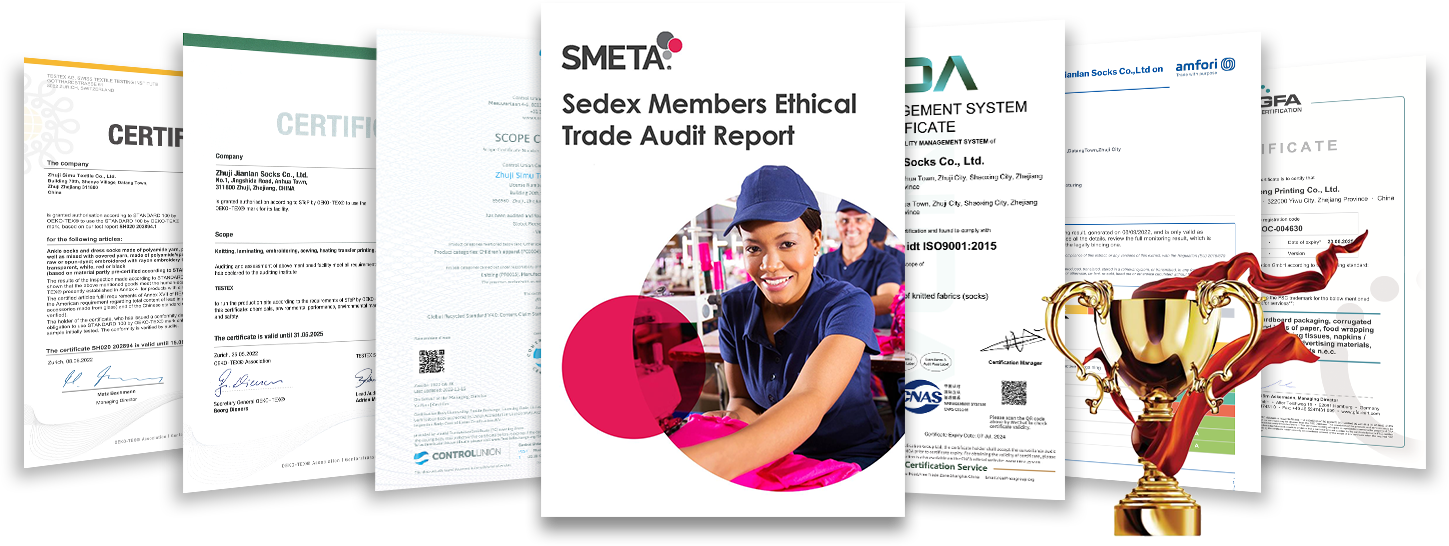
As one of the leading ankle socks suppliers in China, we warmly welcome you to wholesale bulk hot sale unisex ankle socks from our factory. All customized socks and tights are with high quality and low price. For OEM service, contact us now.
(0/10)



