

Compression stockings (Flight Socks, Support Bandage) are a specialized hosiery designed to help prevent the occurrence of, and guard against further progression of, venous disorders such as edema, phlebitis and thrombosis. Compression stockings are elastic compression garments worn around the leg, compressing the limb. This reduces the diameter of distended veins and increases venous blood flow velocity and valve effectiveness. Compression therapy helps decrease venous pressure, prevents venous stasis and impairments of venous walls, and relieves heavy and aching legs.
Knee-high compression stockings are used not only to help increase circulation, but also to help prevent the formation of blood clots in the lower legs. They also aid in the treatment of ulcers of the lower legs.
While compression stockings aren’t a cure for venous insufficiency, they are excellent at temporarily reducing the swelling in the legs and the size of your varicose veins. By pressing on the veins very tightly, the compression stockings will push the blood in the varicose veins back towards the heart and thereby reduce swelling.
Apart from the swelling, pain is another thing that most patients with venous insufficiency suffer from. The high pressure that the compression stockings exert on the body helps reduce the pain that the swollen and damaged veins are experiencing. Using compression stockings during your walks and runs will go a long way in helping you experience pain relief when you move.
Compression stockings are the best way to ensure that the skin on your legs doesn’t become leathery or look red and inflamed. Wearing them sooner rather than later ensures that your legs get the timely care they need.
Deep vein thrombosis (DVT) is a condition where blood clots form deep in the veins of the body. In chronic cases of venous insufficiency, patients are extremely likely to develop deep vein thrombosis.
Graduated compression stockings
With this type of compression stocking, the compression is strongest at the ankle and decreases up toward the knee. If you have peripheral edema or orthostatic hypotension, your doctor may recommend this type. In fact, graduated compression stockings generally require a doctor’s prescription and professional fitting.
Anti-embolism stockings
This type of stocking also features graduated compression that decreases from the ankle upwards, but it is used for people who are not mobile. “Anti-embolism stockings can help reduce the chances of developing deep vein thrombosis,” says a Riverside provider. Anti-embolism stockings also generally require a doctor’s prescription and professional fitting.
Nonmedical support hosiery
This type of compression stocking does not require a prescription and is available at most pharmacies. Support hosiery offers the same level of compression throughout the stocking and can provide relief for tired, achy legs.
Application of Compression Stockings
Boosting circulation
One of the main benefits of wearing compression socks is improved circulation. Compression socks continuously squeeze your feet and legs throughout the day, which encourages oxygen-rich blood to flow through your leg veins. This helps lower the chance of blood clots and speed up the healing process for people who are prone to pressure sores and other wounds.
People with conditions like diabetes, deep vein thrombosis (DVT), and varicose veins may benefit from wearing compression socks to improve circulation in their lower legs.
Decreasing swelling
Compression socks can improve lymphatic drainage in your feet, ankles, and calves. Lymphatic drainage is a process that helps circulate lymph, or tissue fluid, around the organs and vessels in the lymphatic system.
This can help to reduce and prevent swelling for people who have certain conditions, such as lymphedema. It can also be beneficial for pregnant people, especially during the third trimester.
Reducing pain
By improving blood flow and circulation, compression stockings can relieve pain, discomfort, and a heavy feeling in the lower legs. This may be especially useful for people who:
A: Are often on their feet at work, such as retail and healthcare workers
B: Have to sit for long periods of time, such as pilots, frequent travelers, and wheelchair users
C: Work from home
D: Have chronic pain or fatigue
E: Recently undergone surgery
Preventing dizziness upon standing
Compression socks encourage oxygen-rich blood to flow up through your legs and back toward your heart. They also prevent blood and lymphatic fluid from collecting and remaining stagnant around your feet and ankles. This may help to relieve symptoms like lightheadedness, dizziness, and low blood pressure just after standing up for people with conditions like:
A: Dysautonomia (a disorder of the autonomic nervous system)
B: Orthostatic hypotension (low blood pressure that drops when moving to stand up)
C: Vasovagal syncope (fainting caused by a sudden drop in heart rate and blood pressure)
D: Postural tachycardia syndrome (POTS)
Improving exercise performance
Athletes often use compression socks to improve exercise performance and endurance, reduce muscle soreness and fatigue, and decrease recovery time after a tough workout or injury.
It’s not entirely clear why compression socks may be useful during and after vigorous exercise. However, some researchers argue compression socks can move lactic acid more efficiently through the muscles, which speeds up the recovery process.
Nylon
As a highly versatile synthetic polymer, nylon has been an essential material in the production of compression socks. Its excellent elasticity ensures the necessary compression, while its durability withstands wear and tear. Furthermore, nylon has superb moisture-wicking properties, offering dry and comfortable wear throughout the day.
Spandex
Spandex, also known as elastane, is another vital synthetic fiber in compression sock fabrication. Renowned for its exceptional elasticity and strength, spandex provides the graduated compression necessary for therapeutic effectiveness. This resilience maintains the sock’s compression level, ensuring a consistent therapeutic experience over time.
Copper-infused fabric
Recent advancements have led to the development of copper-infused fabric. Copper ions embedded in the fabric may offer antimicrobial properties, reducing odor and improving hygiene. While this feature is still a subject of research, it suggests an exciting avenue for compression sock technology.
Micromodal fabric
Micromodal fabric is another cutting-edge material finding its way into compression socks. This sustainably sourced fabric, derived from beech tree pulp, is extraordinarily soft and breathable, offering superior comfort and thermal regulation. Moreover, it’s hypoallergenic and retains color well, enhancing the overall aesthetic and lifespan of the sock.
Microfiber blends
Microfiber blends are another option to consider when choosing compression socks. Microfiber, a synthetic material made from polyester or nylon, is often combined with spandex to create a soft, durable, and elastic sock. These blends are lightweight, quick-drying, and exceptionally comfortable, making them ideal for individuals who wear compression socks daily or for extended periods.
Wool blends
For colder climates or winter months, wool blends are a superior choice. The natural insulating properties of wool provide warmth, while its ability to wick away moisture keeps the feet dry. When blended with synthetic materials like nylon and spandex, the result is a warm, comfortable sock that maintains its therapeutic compression.

How Do Compression Stockings Work?
Compression stockings work by applying pressure on the veins and tissues in your feet and legs to optimize blood flow, or circulation. Compression socks will also aid in the prevention of blood clots, reduce pain and fatigue, and minimize swelling. These stockings are often graduated, applying stronger pressure on the feet and lower legs and more gentle pressure as they move up the leg.
How to Put Your Compression Stockings On.
Grab the heel pocket and turn the sock inside out. Slide the sock halfway onto your foot. Hold both sides of the top band and pull the sock over your heel and up your calf. Adjust the heel pocket and smooth out any wrinkles. The band should be the width of two fingers from the bend of your knee. If you do have a weakness in your hands or limited mobility, there are donning aids to help such as donning butlers.
Tips for First-Time Compression Stocking Users
If you're trying out compression socks for the first time, you might find them a little difficult to manage. To make them a easier to put on, here are a few tips you should consider.
If you can, buy more than one pair so you have a clean pair while one is dirty.
When you first put them on, compression socks or stockings might feel uncomfortable and make your legs ache or feel sore. This is normal, and you should get used to them after a few wears. But if you have extreme pain, or your legs or feet become discolored, call your doctor right away.
There are so many different options when it comes to compression socks and stockings, that it can be a challenge finding the type that best suits your unique needs. To make the process easier, here are 3 simple steps to choose the right compression socks for you.
Choose the compression level
The key to gaining the most benefit from your compression stockings is to choose the right compression levels to address your needs. A good rule of thumb to follow is:
15-20 MmHg: Great for daily wear, travel, and sports. They help improve circulation without being too tight.
20-30 MmHg: Great for sports recovery, daily wear, medical recovery, and to manage mild symptoms of varicose and spider veins. Ideal for patients looking for more support.
30-40 MmHg: This level of compression stockings is recommended for serious conditions such as blood clots (DVT), severe swelling (edema), and severe varicose veins.
Always Consult With Your Doctor
For specific medical conditions, it’s important to consult with your doctor on the exact compression level for you.
Choose if you want a sock or stocking
If you are looking for compression stockings, you have the option of a compression sock or stocking. Here’s what you need to know:
Knee high socks: These compression socks stop below the bend of your knee. You should not pull these over your knee as it can be uncomfortable and sometimes dangerous, depending on your condition and the compression you’re wearing. This is ideal if you have swelling in your ankles.
Thigh high: These cover your entire leg, stopping at the top of your thigh. They are meant to cover your entire thigh and improve circulation throughout your leg.
Pantyhose/waist high: Waist high compression stockings have both legs connected by a torso portion. They are able to bring swelling up and out of your legs through your hips.
Choose your style and material
To further customize which type of compression stocking is right for you, you also have a wide range of options when it comes to style and material.
Opaque fabric: This is ideal for both men and women because they are easy to wear and strong enough to provide enough compression to your legs. They are also more durable than sheer fabrics.
Sheer fabric: These are lightweight, transparent, and fashionable, and are easy to pair with many clothes. At times, however, they snag, and don’t provide as much containment for swelling.
Cotton or wool: Compression socks for running or sports are made of durable materials that control heat and moisture. While they’re also a great choice for daily wear, varicose veins, and swelling, this material is generally only available in lower compression levels.
Our production management team has more than five to ten years of management experience, in line with the care of the staff, it made us become a high-quality team.


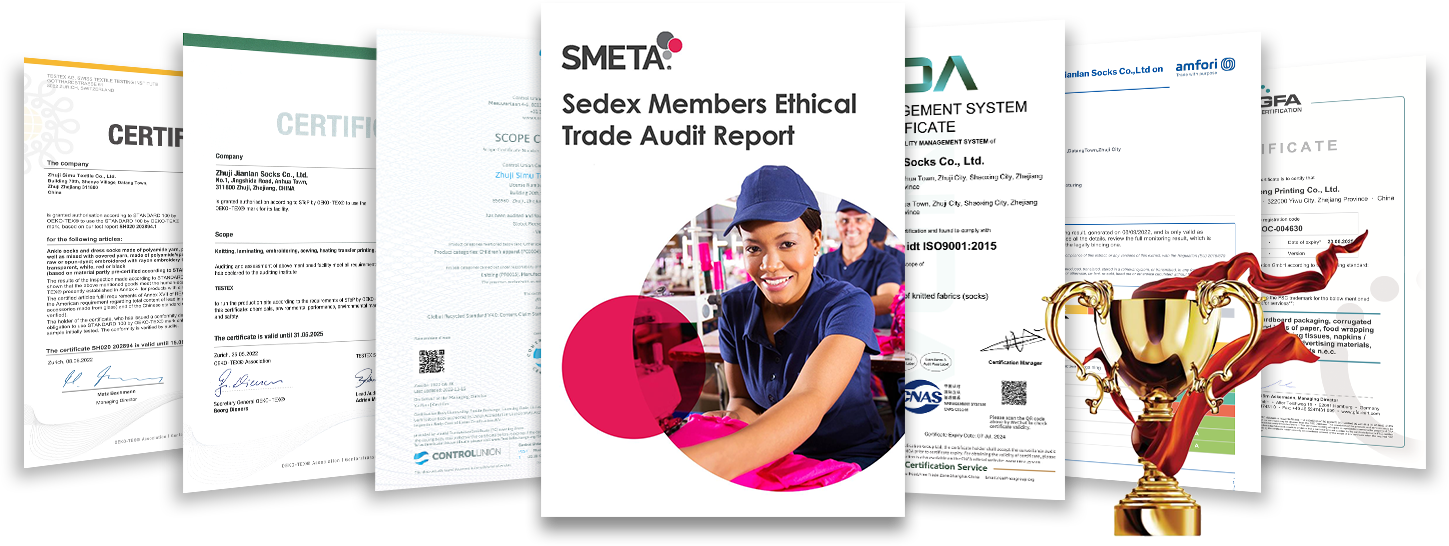
As one of the leading compression stockings suppliers in China, we warmly welcome you to wholesale bulk hot sale unisex compression stockings from our factory. All customized socks and tights are with high quality and low price. For OEM service, contact us now.
(0/10)



