
Sports socks are the specific types of socks especially designed and manufactured for sports activities and rough usage. These socks are comparatively more durable and firm. Any sports person, athlete, or person who loves to do massive physical workouts is recommended to wear these socks. It is safe to perform such physical activities that require major human physical effort wearing sports socks.
Moisture resistance
Sports socks are constructed from synthetic yarn, often a blend of nylon and polyester. These materials have extraordinary moisture-wicking properties and can sop up sweat very quickly. Apart from this, such socks have superior ventilation panels fitted in the sock structure to keep your feet dry and cool.
Reinforced heel & toe cushioning
These socks have selective cushioning & specially designed arch support that gives you grip & keeps your feet comfortable the entire day. The arch support offers enhanced mobility and balance, which eventually lessen fatigue even after prolonged periods of physical activity. Also, the suitable compression in the arch protects the back of the foot from impact.
Anti-microbial & odour control
Wearing socks for too long can result in your foot becoming a breeding ground for microbes. Performance socks are usually treated with antimicrobial finishes that protect your feet from infections while keeping them cool, dry & odour-free.
Ankle support
Along with helping minimize fatigue while playing, the compression in the ankle support improves blood circulation.
Anti-slip resistance system
Most athletic socks also have a unique resistance system built with the help of anti-slip silicone pads to keep the socks well-fitted around the foot
Anatomical left and right toe
The construction of these socks factor in the importance of fit and hance, have a specially designed left and right sock to deliver on great fit and comfort
Running socks
It supports your feet perfectly and makes your feet comfortable while running.
Yoga socks
Yoga socks are flexible and lightweight; it allows comfortable movement in yoga positions.
Basketball socks
The basketball sock provides a high level of support in the heel and toe area and ensures that it does not slip during movement.
Volleyball socks
The volleyball sock provides a high level of support for the ability to push and control the ball and makes it easier to control the ball while pushing.
Football socks
They are specially designed for football. They are made from materials that wick moisture away to help keep players' feet dry and comfortable during play, and can also have various features to provide extra comfort and support. Soccer socks help protect the legs and ankles against injury. They are usually worn with crampons and come in a variety of colors and styles. In some cases, soccer socks may also have team logos or other identifying marks.
Cuff/top welt
The cuff or welt of a sock is the topmost part of the sock, and it’s knitted with a ribbed or patterned stitch that allows it to cling to the leg and stay up.
Sock leg
As the name would imply, the leg of a sock is the expanse of fabric that runs from the cuff of the sock to the heel. This is the portion of the sock that is most visual in terms of custom socks, and this section is generally seen above the shoe.
Sock heel
There are many styles of heel construction that can be used in sock making and sock manufacturing,No matter the style of the heel, each has the same task: it is the part of the sock that cups and fits snugly around the heel of the foot. The sock heel absorbs shock and can be manufactured with extra cushion to provide longevity and comfort, seen most widely in Athletic Socks or Performance Socks.
Footbed
From the heel all the way down to the toe, all of the fabric covering the top and bottom of the foot is quite simply called the Footbed. As with the heel in Athletic Socks, the Footbed and varying associated portions can be customized to provide more cushion for both support and durability;he foot bed also allows for design components such as images and creative knitting that can set you apart as a superior Performance Sock Brand.
Toe box
As the name implies, the toe box of the sock is the gently rounded portion at the end of the sock that covers the toes and closes the end of the garment to finish forming the classic sock shape. Toe boxes can be straight or knitted with a slight slope for a flush fit specifically to the right or left foot. The Traditional Method of closing a sock at the toe involves knitting a sock tube with an open toe, followed by sewing both edges of the fabric together inside. This technique creates what can be a bulky and uncomfortable seam inside of the toe box.
Cotton
Cotton is easy to find and relatively inexpensive, but it may not be the best choice for sports. Cotton is great at absorbing moisture, but lousy at letting it go. Because cotton socks soak up sweat and keep it there, right next to your feet, they tend to promote blisters. Moisture, combined with the heat from your hard-working feet, also encourages fungus. And cotton socks can lose their shape easily and bunch up—not comfortable when running or jumping.
Synthetic fiber
Many athletic sock types use an array of synthetic fibers, whether it’s alone, in combination with other synthetics, or with cotton or wool. Nylon can endure a lot of pulling and stretching, but isn’t very good at wicking moisture away. Acrylic also stretches well, and it’s better at wicking away sweat. Polyester is an inexpensive fabric that absorbs moisture as well as or better than nylon and keeps feet dryer. Polypropylene is great at wicking, and also very warm—that’s why you’ll find sock liners made of polypropylene.
Wool
Wool is warm, and it can keep feet toasty even when wet; but this brings us back to the hot and sweaty, blister-encouraging, fungus-friendly scenario that cotton also creates. This is where blending natural fibers with synthetics comes into play—the sock keeps the benefits of the natural fiber while the synthetic mitigates some of the downside by improving wicking.

Process of Sport Socks
Pattern coding
What our clients provide us are the sock designs, however sock knitting machine are not that intelligent to read the designs directly. A professional coding team who are familiar with sock pattern and mahine mechanism will do this job. They will transfer your vector designs into bitmap designs and then codes that the knitting machines can read. Every pixel of the bitmap design means a thread with the specific color will be knitted through.
Different needles of knitting machine means the widths of flat bitmap designs are different, 96N, 144N, 168N, 200N of machines means the widths are 96, 144, 168, 200 pixels, respectively. And the limit of threads count is the reason why socks can’t present gradient or detailed patterns.
Yarn preparation
In the order details we have confirmed 2 important things regardign yarn: Composition and Colors.
Knitting socks
Using programmed codes in step 1, multitude of needles then knit the various threads into a series of interlocking loops. Computerized sock knitting machines work at high speeds and can easily be programmed to produce a wide variety of socks. 1st inline-inspection is implemented here to avoid mistakes like length, trimming, interlocking etc.
Linking/sewing socks
Knitting makes a cylinder tube, thus we need to the sewing process in order to link the seperated toe parts together. This is usually done by machine, which is quick. Sometimes this process is also done by manual work, which costs a lot of time. Since the socks are sewed one by one, our skilled workers can easily find defective socks and clear them away from the majority, which is the 2nd inline-inspection.
Boarding socks
The boarding process is actually implemented to keep the socks in good shape, so that they can easily be paired and packed. One more thing to note here is that the boarding step also keep the socks clean and soft by experiencing steams under a fixed pressure and temperature. After boarding, the socks will naturally dryed.
Pairing&labelling socks
This is the final inspection step to see if there is any deflection on the socks. The left and right socks are paired together and then passed on to be private labelled. You can choose hangtags or bands to label your socks.
Separate your socks before washing
Before washing your sports socks, make sure to separate them from other garments. This will prevent them from getting tangled with other clothes or getting overstretched in the washing machine. Putting them in washing bags will ensure they get cleaned but do not get damaged by the washing machine.
Use a gentle detergent
Harsh detergents can damage the fabric and cause shrinkage. It's advisable to use a mild detergent or detergent specifically formulated for sportswear. This will help remove sweat, dirt, and odor without harming the material.
Wash socks in cool water
Hot water can damage the elastic material used in most sports socks. Make sure you wash them in cool water to avoid shrinkage and stretching. Cool water is either cold or 30 degrees Celsius. Washing socks at 40 degrees Celsius will clean them well but you may lose the elasticity of the socks as the hot water may damage the elastane fibers, which are the fibers that give the elasticity in your socks.
Avoid bleach and fabric softeners
It's very simple: no bleach, no softener. Bleach is a strong chemical that can make the colors fade quickly and weaken the fabric's quality. Similarly, fabric softeners can clog the pores of the socks' material, which can reduce their breathability. Avoid using these harsh chemicals while washing your sports socks.
Dry them correctly
Once you've washed your sports socks, it's time to dry them. Avoid using a dryer as it can damage the elastic material and shrink the socks. Instead, hang them in a well-ventilated area and let them air dry. Make sure to avoid direct sunlight, which can cause discoloration.
Many individuals do not understand the difference between sports and normal socks. They often do random purchases of socks for different types of usages and purposes. You shouldn’t buy socks without knowing the comprehensive differences between normal socks and sports socks.
Absorption of moisture
It has been observed that sports socks absorb more sweat and moisture than normal socks. And that is why sports socks are used more in sports activities.
Cushion stuff
Normal socks do not have cushion stuff inside of them, but many sports socks are stuffed with a cushion or padded cushions for the safety of the sports players.
Cost effectiveness
Normal socks are cheaper than sports socks. Sports performance socks are usually costlier than normal socks. But there is a great difference in quality too.
Difference of material used
Normal socks are mostly made of cotton, nylon, polyester, and wool. Some of them are made of bamboo, cashmere, and silk. Whereas, sports socks are made of nylon, polyester, and synthetic material. Some amount of spandex is also mixed to give it more durability and flexibility.
Socks thickness
Athlete socks are thicker than normal socks because of their material and the padded cushions. Though, you can buy some normal socks with a little more thickness.
When it comes to choosing the right custom socks for your sport, there are a few key factors to consider. Here are some of the things you should keep in mind:
The type of activity you’ll be doing
Different sports require different types of socks. For example, cushioning socks are great for running, while compression socks are better for sports like basketball and soccer.
The type of material
Different materials offer different levels of protection and comfort. For example, moisture-wicking fabric can help keep your feet dry and cool, while cotton can provide extra cushioning.
The fit
It’s important to choose socks that fit properly. If the socks are too tight, they may cause discomfort or restrict blood flow. If they’re too loose, they may cause blisters or slip off your feet.
The style
Custom socks come in all shapes, sizes, and colors, so you can choose the ones that best match your style.
Cushion and support
Look for padding on the front and heel of the sock. This may help cushion your feet and prevent blisters. Padding takes up more space, so watch out that it doesn’t make your shoes too tight.
Temperature
If you’re partaking in winter activities, you'll probably want socks that will keep your feet warm and dry.
Compression
Compression gear applies gentle pressure to stimulate circulation and deliver increased blood flow and oxygen to your muscles. Athletes who work out and perform frequently often prefer compression socks as a way to help boost recovery.
Slippage and bunching
This may have to do with finding the proper sizing, but make sure the material is tight enough in the right places such as the toe area, which helps keep the sock in place.
Moisture wicking
Acrylic, polyester, and wool blends will help keep your feet dry.
Odor control
This is related to keeping your feet dry. If the fabric can dry quickly, odor-causing bacteria won’t have as much of a chance to grow. Wool and polyester materials are great options.
Our production management team has more than five to ten years of management experience, in line with the care of the staff, it made us become a high-quality team.


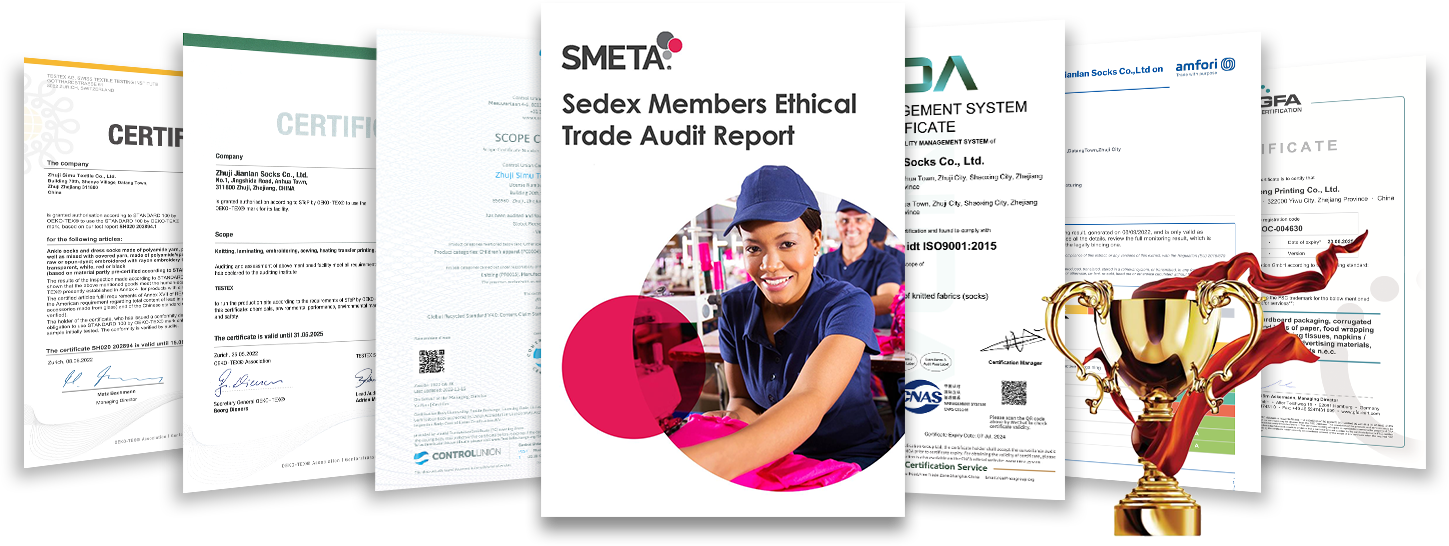
As one of the leading sport socks suppliers in China, we warmly welcome you to wholesale bulk hot sale unisex sport socks from our factory. All customized socks and tights are with high quality and low price. For OEM service, contact us now.
(0/10)



